
The Minneapolis Shooting
A Wake-Up Call on Weaponized Protests and Fractured Empathy

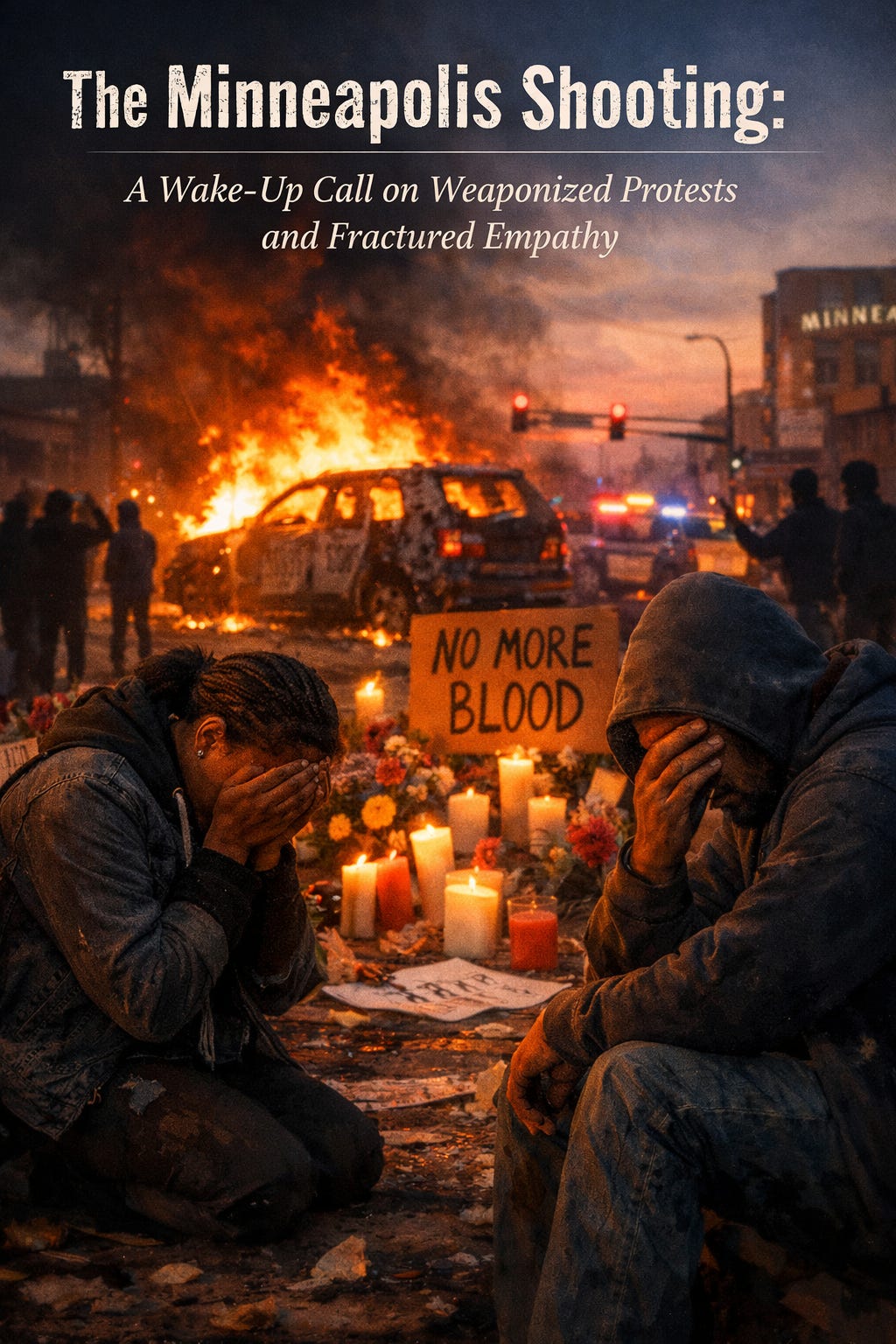
In the chill of a Minneapolis winter, a tragic encounter between ICE agents and a bystander named Renee Good has ignited fresh fires in our national discourse. On January 7, 2026, Good accelerated her SUV on an icy road, leading to shots fired by an agent who saw peril in the moment. Facts point to self-defense. Yet protests erupted, schools closed, and the narrative spun into accusations of overreach. This incident echoes the cultural slips we explore here: echo chambers amplifying emotion over reason, agendas driving division, and youth caught in the crossfire. What if this tragedy forces us to confront how protests have become tools for manipulation rather than genuine outcry?
Facts Amid the Fog: What Happened and Why It Matters
Strip away the emotion, and the sequence is clear. ICE agents, amid targeted deportations, approached Good’s vehicle. She was not the focus, but interference escalated. Video shows acceleration toward an agent, wheels slipping on ice before gaining traction. The agent fired, citing imminent danger. Federal voices, including President Trump and Vice President Vance, call it justified. Local leaders demand withdrawal. Investigations will parse every frame, but initial accounts lean toward lawful response.
Zoom out, and this fits a pattern. Deportation operations in sanctuary cities like Minneapolis draw swarms of protesters, blocking roads and heightening risks. Good’s death is heartbreaking; her family shattered. A wife witnessed the horror, a child left without a mother. That pulls at the heart. But does it alter the core? She broke the law by interfering. Did fear drive the agent’s trigger, or malice, perhaps even a misfire? In a nation weary of endless fights to enforce borders, this underscores a breaking point. We cannot let empathy eclipse accountability.
Protests as Political Theater: The Hidden Machinery
Protests once symbolized organic dissent. Now, too often, they serve as scripted disruptions. Nate Friedman, an independent journalist, has exposed this machinery. His infiltrations reveal payments to participants, funneled through networks tied to influential donors. In New York and beyond, he documented rallies where attendees earned cash to chant slogans, amplifying agendas on immigration, socialism, and more. These are not grassroots uprisings. They are orchestrated to stall enforcement and sway public opinion.
In Minneapolis, with 2,000 ICE agents targeting communities, the rapid mobilization raises questions. Were elements paid to swarm? Past patterns in Minnesota, from fraud probes to border tensions, suggest yes. This ties to broader cultural drifts: social media algorithms feeding bias, short clips confirming preconceptions, and a generation taught to emote rather than analyze. Recall the DSA series here on Substack, tracing how radical left influences mainstreamed through figures like AOC and Sanders. Protests fit that long march, weaponizing crowds to resist reforms.
Enough with the manipulation. It frustrates when genuine fear in communities gets co-opted for political gain. What started as concern spirals into chants of “Death to ICE,” closing schools and deepening divides. Is this progress, or just theater prolonging chaos?
Weaponized Empathy and the Generational Divide
Empathy is vital, yet twisted into a weapon, it blinds us. “Weaponized empathy” floods discourse with pathos, overriding facts. Good’s story evokes sympathy: a compassionate mother, caught in the wrong place. Protesters respond out of fear, and who can blame that instinct? But it distracts from responsibility. Interference led to tragedy. Blaming agents ignores the peril they face enforcing laws long ignored.
This mirrors generational fires we unpacked in “Young Men and the GOP.” Young men, drawn to structure amid cultural chaos, lean right. They see through echo chambers and demand critical thinking over emotional torrents. Gen Z, raised on algorithms and whole language over phonics, struggles with nuance. Protests pull them in with 30-second takes, confirming biases without challenge. But tragedies like Minneapolis could wake them. What if this exposes the paid underbelly, urging unapologetic action?
Borders matter, as explored in “Borders and the Slow Burn.” Lax enforcement breeds resentment. Deportations, though tough, restore order. Empathy for families does not mean open gates. It means honest local reforms: teaching responsibility, rebuilding free ideas.
A Call for Reckoning: Beyond the Tragedy
Minneapolis is no game. Good’s death, avoidable yet self-inflicted, highlights costs when emotion trumps law. Investigations will clarify the stop’s context. If baseless, hold agents accountable. But assuming malice without facts perpetuates division.
This could be the reckoning. Expose paid protests. Demand critical discourse. Act locally to reform culture slipping into agendas. For youth, especially young men finding voice in the GOP, it’s a pivot point. Frustration builds when manipulation stalls progress. Time to challenge it head-on, honestly.
What say you, readers? Share thoughts below. Let’s unpack this together.
Further Reading: Dig Deeper and Question the Narrative
Knowledge thrives on curiosity. The conclusions drawn in this piece stem from a mosaic of facts, investigations, and cultural observations. To empower readers in their own pursuit of truth, below are six external sources that shaped key insights. Each offers a window into the details, from the Minneapolis incident to the mechanics of modern protests and shifting generational tides. Explore them critically, cross-reference, and challenge assumptions. What hidden threads might you uncover?
On the Minneapolis Shooting Details: For a factual breakdown of the ICE encounter with Renee Good, including federal and local perspectives, see this BBC report.
Nate Friedman’s Investigations into Paid Protests: Dive into Friedman’s exposures of compensated activism at anti-Israel rallies, highlighting payments and organizational ties, via the Jewish Journal.
Examples of Weaponized Empathy in Immigration Policy: The Heritage Foundation examines how empathy is manipulated at borders, leading to exploitation rather than solutions.
Gen Z Young Men and GOP Trends: Scientific American analyzes why many in this demographic supported Trump, tying into identity and inequality concerns.
Networks Funding Protests: The Jerusalem Post details a pro-Palestinian activist paid thousands, shedding light on professional protest structures.
Trump’s Deportation Operations in Minnesota: CNN covers the deployment of agents targeting the Somali community, providing context for the escalated tensions.
These resources invite scrutiny. In a world of algorithms and agendas, personal research remains the sharpest tool for clarity. What questions do they spark for you?